

Steve Bloomer – The First Superstar of English Football
Famous People from Derby
Directory Derby Editorial Team
Legendary Derby County striker with 332 goals in 525 matches, England international with 28 goals in 23 games, Honoured with a statue at Pride Park Stadium
When you walk into Pride Park Stadium, home of Derby County FC, one figure stands tall in both statue and spirit — Steve Bloomer. With his piercing stare and unmistakable presence, he represents not just Derby’s storied past, but a foundational era of football itself. Born in a time when the beautiful game was still finding its shape, Bloomer helped define what it meant to be a footballer — prolific, passionate, and powerful.
Early Life: From Cricketer’s Son to Football Prodigy
Stephen Bloomer was born on January 20, 1874, in Cradley, Worcestershire, England, before his family moved to Derby when he was a child. He was one of six children in a working-class family. His father, a blacksmith, died when Steve was just a boy, and his stepfather — a baseball player — introduced him to both baseball and football, two sports that would shape his youth.
Bloomer’s athletic prowess became evident early. He played for local sides like Derby Swifts and Derby Midland, where his natural eye for goal and explosive speed began to attract attention. At just 17 years old, he was signed by Derby County, the club where he would become a legend.
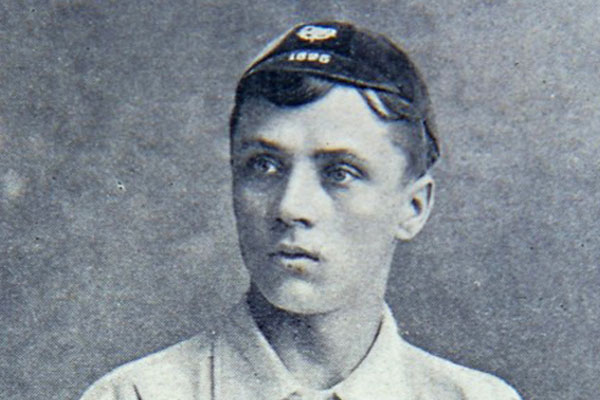
Derby County Icon
Bloomer made his first-team debut for Derby County in 1892, scoring in a 2–1 win over Stoke. What followed was a truly staggering goal-scoring career. In his first spell with Derby, Bloomer scored 240 goals in 376 appearances, a record that made him the top scorer in the Football League First Division five times.
Nicknamed the “Destroying Angel” for his deadly finishing and aggressive play, Bloomer was more than just a striker. He read the game with a sharpness that was rare for the time. In an era with muddy pitches, heavy boots, and little tactical nuance, Bloomer’s intelligence and poise set him apart. His ability to find space and shoot accurately from distance made him a constant threat.
International Stardom
Bloomer’s performances for Derby did not go unnoticed by the national team selectors. He earned his first cap for England in 1895 — and scored twice. Over the course of his international career, he won 23 caps and scored 28 goals, a ratio that would be enviable even today.
He held England’s goal-scoring record until the 1950s. At one point, he scored in 10 consecutive international matches, a record that stood for decades. Bloomer’s international goals came at a time when England only played a handful of matches per year, which makes his tally even more impressive.
A Move to Middlesbrough and Return to Derby
In 1906, in a move that shocked fans, Bloomer transferred to Middlesbrough for a then-impressive fee of £750. Despite being in his thirties, he continued to score regularly, proving that age had not dulled his instincts.
He returned to Derby County in 1910 for a final stint and helped the club gain promotion from the Second Division in the 1911–12 season. His final tally in English football: 317 goals in 536 league appearances, placing him among the all-time top scorers.
War and Tragedy
When World War I broke out, Bloomer was in Germany coaching a football team. He was interned at Ruhleben, a civilian detention camp near Berlin, along with other British civilians. Even in captivity, Bloomer’s love for football did not fade. He organized matches inside the camp and kept spirits high among his fellow prisoners.
After the war, he returned to Derby, this time to take up a coaching role. He also worked briefly as a journalist and remained a deeply respected figure in the English football world.
Legacy and Death
The Derby Museum & Art Gallery is not just a place to look at the past – it is a space to understand the present and dream about the future. Whether you come for the art, the history, or the quiet inspiration found in its sunlit galleries, this museum offers a truly enriching experience.
It stands proudly as a symbol of heritage, creativity, and community spirit, making it one of Derby’s most treasured destinations. For locals and tourists alike, it is a cultural home that both honours tradition and embraces change.
Why Steve Bloomer Still Matters
In the modern game, where global stars are celebrated for their social media presence as much as their skills, Steve Bloomer reminds us of a simpler time — when footballers played for pride, passion, and their people. His records speak for themselves, but it’s the way he carried the sport forward, how he became football’s first superstar, that truly cements his legacy.